
Browse Questions
DYS Victim Services
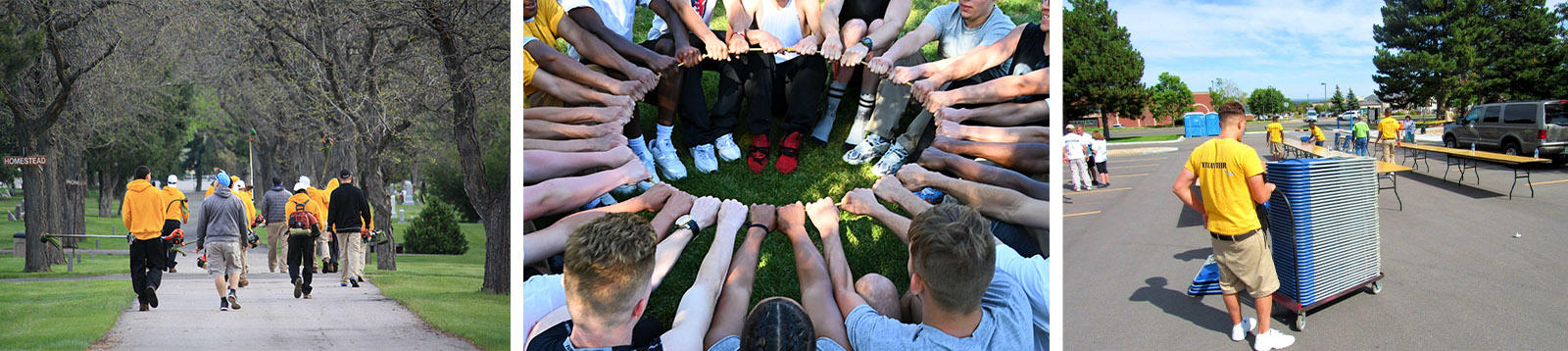
If you’re a crime victim, the Colorado Constitution guarantees you certain rights. For those of us who are part of the Division of Youth Services (DYS) staff, helping victims like you to better understand and exercise those rights isn’t just a priority – it’s our mission.
We know that the legal system can make you (and your loved ones ) feel like a victim all over again. Because of that, we work hard to ensure that victims of crimes perpetrated by youth in DYS custody are treated with fairness and compassion throughout the criminal justice process.
The staff at Victim Services work to address the diverse needs of victims to curb any possibility of re-victimization. In support of these goals, DYS staff:
- Uphold the rights of crime victims to be treated with fairness, respect and dignity.
Work to ensure that victims are heard, informed and present for critical stages in the criminal justice system.
Promote the safety and restoration of victims and communities.
To that end, DYS staff offer a variety of services and information that include:
- Victim Notification (VNOT) program enrollment, Critical Stage notification.
- Options for various restorative opportunities.
- Restitution inquiries.
- Juvenile justice system and DYS inquiries.
- Inquiries regarding the statutory rights of victims as outlined in the Colorado Victim Rights.
- Amendment and enabling legislation.
- Referrals for additional support services, or any other topics related to the victim's case.
- Aid in applying for Crime Victim Compensation funds.
- Aid in preparation of a Crime Victim Input Form.
The Victim Services/Restorative Justice Coordinator also provides training for DYS staff regarding DYS responsibilities under the “Victim Rights Act,” the impact of crime on victims and Victim Empathy Class facilitator training.
Download Victim and Restorative Community Justice Forms on the Forms page.

Victim and Offender Dialogue Program
Victim offender dialogue (VOD) is a victim-centered, confidential, face-to-face meeting between a victim/survivor and the juvenile offender of a severe or violent crime. The goal is for the victim/survivor to be heard and to ask questions only the offender can answer. The experience of talking directly with the juvenile in a safe setting gives the victim/survivor a voice to the pain and trauma they've experienced. They’re finally able to express themselves.
When juvenile offenders can listen and understand the complexity of feelings about the harm they caused and take full responsibility, they can better understand the devastating effects of their actions. As a result, some will try to make a new and meaningful purpose in their lives.
The process isn’t about forgiveness or reconciliation. But that can occur.
Centering on survivors: The victim-initiated VOD program
Your journey belongs to you. And you deserve to move at your own pace. Our Victim-Initiated Victim Offender Dialogue Program is completely voluntary. We’ve designed it to offer survivors an avenue for voice and agency that the courtroom often misses.
Because every situation and person is unique, outcomes aren’t always the same. Through a careful, highly supported preparation process, we work to create a space where survivors have the opportunity to:
- Seek answers: Ask the specific questions that matter most to you, understanding that youth readiness to answer honestly varies.
- Express the impact: Share how the harm affected your life in a secure, professionally facilitated environment.
- Explore accountability: Open a door for youth to face the impact of their actions, and learn more about the DYS accountability letter process.

What does ‘victim-centered’ mean?
When we say our practices involve victim-centeredness, we mean that the safety, needs, and choices of the person survivor sits at the heart of our work.
Traditional systems often treat the victim as a bystander or a witness. In a victim-centered approach, we flip that script. What this does in practice is:
- Prioritizes Choice and Control. Survivors decide if, when, and how they want to engage. You are never forced or pressured.
- Ensures Emotional Safety. Every step is designed to prevent further harm or re-traumatization.
- Honors Individual Needs. We recognize that healing looks different for everyone. Whether a survivor wants answers, a space to express their pain, or simply an update on an accountability letter, we meet them where they are.
- Enrollment in the Victim Notification Program

Once enrolled in the Victim Notification (VNOT) Program, victims receive updates throughout the stages of the juvenile offender’s supervision. Effective April 2012, The DYS VNOT program proactively enrolls identified crime victims in this program, which provides critical stage notification as a standard practice.
If you no longer want to be enrolled in the DYS victim notification program, you can opt out at any time.
DYS serves two types of youth: those being held in detention for short periods of time, and those who’ve been committed to DYS custody.
- Crime victims of detained youth are enrolled as a result of information received from criminal justice agency victim advocates. These advocates are in sheriff offices, police departments and District Attorney offices. Critical stage notification for crime victims take place through an automated system called the Victim Information Notification Everyday (VINE) Program. Crime victims may disenroll from the VINE program by following the guidelines provided at the end of each telephone contact made to them through the VINE automated system.
- Committed youth. Individuals who have been crime victims of VRA identified crimes are automatically enrolled in the VNOT program and receive critical stage notification throughout DYS youth supervision. Individuals who don’t want to receive critical stage notification for committed youth must complete and submit a disenrollment form.
Crime victims will receive critical stage notification if they’ve provided accurate contact information to DYS staff.
Crime Victims are responsible for notifying DYS to initiate changes to their personal contact information by e-mailing spiro.koinis@state.co.us.
If you want to re-enroll in the Victim Notification Program, having previously opted out of receiving critical stage notification, you may submit the enrollment form.
- Restorative Community Justice: Healing Through Connection

Experiencing harm impacts everyone deeply — victims, survivors, families, and entire communities. Healing to the best degree possible from that harm is rarely a straight line, and traditional criminal justice systems.
A path toward accountability and growth
We work with staff, youth, family and community members to develop open paths towards true accountability. True accountability is a learned skill that takes time and practice. When youth enter our residential centers or community-based supervision programs, we provide a structured, trauma-informed environment designed to strengthen accountability and personal growth.
Change is a deeply personal choice. While we cannot force transformation, DYS staff provide the steady boundaries and tools youth need to build a safer, healthier path forward. We support them as they work to:
- Practice new skills: Build skills for healthy conflict resolution, emotional regulation, and open communication. Through commitment to nonviolence and social learning, youth practice navigating relationships more safely.
- Reflect on their choices: Deepen their understanding of social responsibility by reflecting on the ripple effects of their actions on survivors and community members.
- Contribute to the community: Actively participate in structured restorative justice projects in partnership with local community organizations, both within and outside of the division.
- Plan for the future: Partner closely with staff to map out a realistic, accountable plan for their lives as they prepare to transition into the next phase of their lives.
- What to expect: FAQs

Taking the first step can bring up a lot of different feelings. We want you to feel safe, informed, and in control of your journey every step of the way. Here’s a look at how our intake process works and what you can realistically expect.
How do I start the process? And what happens first?
When you reach out to the Office of Victim Services, you will connect with the Victim
Services/Restorative Justice Coordinator.- The Initial Conversation: Our first meeting is simply a safe, no-pressure space for you to share your goals and ask questions. We want to understand what healing and accountability look like for you.
- Information Gathering: We’ll explain the options available, including the Victim-Offender Dialogue (VOD) process and the DYS accountability letter process.
Am I committed to a dialogue if I complete the intake?
Absolutely not. The entire process is 100% voluntary, and you are in the driver’s seat. You can choose to pause, slow down, or completely stop the process at any point, for any reason. Your emotional safety is our top priority.
How long does the process take?
Restorative justice isn’t a quick fix. It’s a careful, deliberate journey. Preparation for a dialogue can take several months. We move at a pace that respects your healing and ensures that everyone involved is thoroughly prepared. Safety is our first commitment/ We’ll never rush you.
What if the youth isn’t ready (or willing) to participate?
This is a realistic possibility we prepare for. A dialogue can only happen if the young person takes responsibility for their actions and is emotionally ready to listen to the impact of their choices without causing further harm.
- If they’re ready: We’ll begin a careful separate preparation process with them.
- If they’re not: We will not move forward with a meeting. However, our office will continue to support you, and we can explore other pathways — such as checking on the status of an accountability letter or connecting you with other support services.
We look forward to connecting and walking through any questions you may have, so please don’t hesitate to reach out.
- Contact
Spiro Koinis
4255 South Knox Court, Denver, CO 80236
P:303-866-7852
E-mail: spiro.koinis@state.co.us